

Whether you’re managing your personal finances or running a business, understanding the core principles of financial management is essential for long-term success. These principles help you make smarter decisions, build wealth, and stay financially secure.
Overview of the 12 Principles

- Organize your finances
- Spend less than you earn
- Put your money to work
- Limit debt to income-producing assets
- Continuously educate yourself
- Understand risk
- Diversify income sources
- Maximize employment benefits
- Pay attention to taxes
- Plan for the unexpected
- Turn principles into habits
- Balance saving and living
1. Organize Your Finances
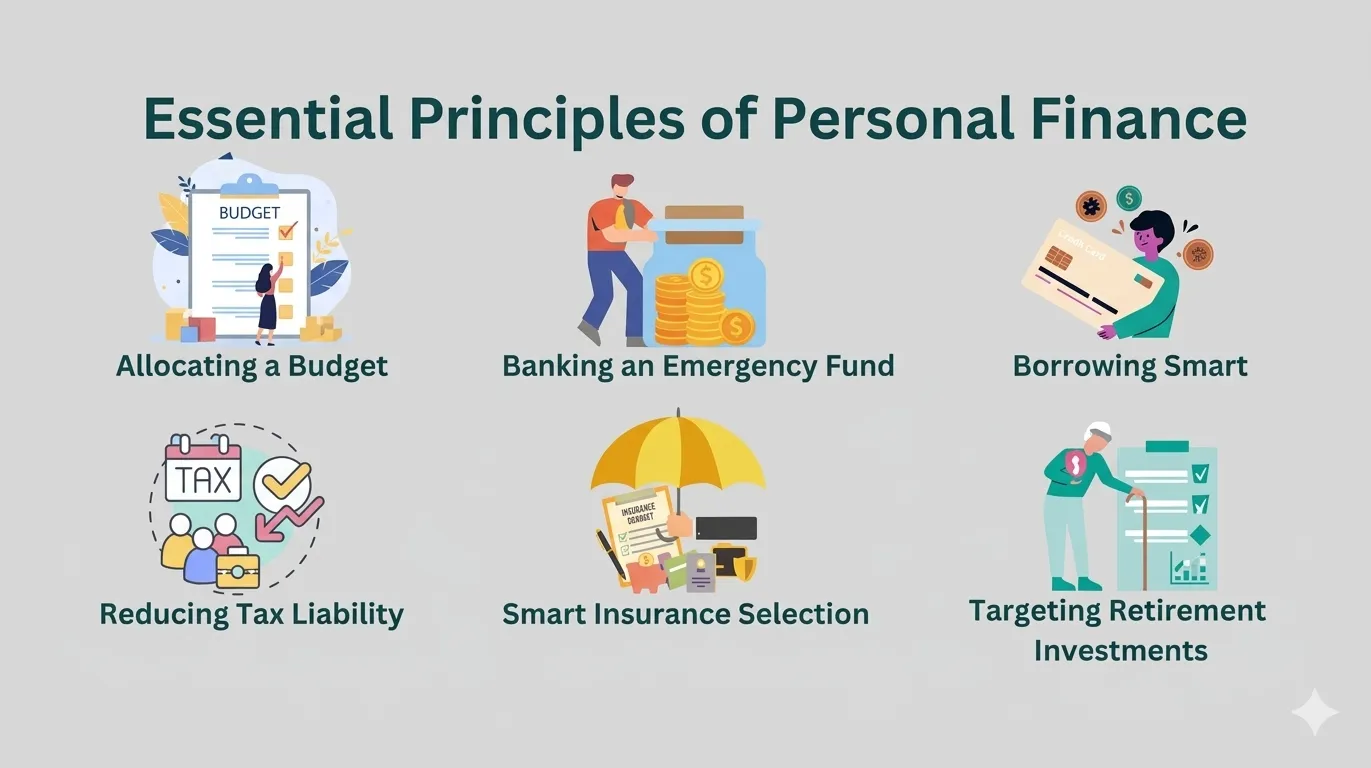
The first step toward financial success is knowing exactly where you stand.
Track all your financial accounts:
- Bank accounts
- Credit cards
- Loans
- Investments
- Retirement funds
Using budgeting tools or apps can simplify this process. Once everything is organized, you can spend less time tracking and more time making informed decisions.
2. Spend Less Than You Earn
This is the foundation of financial stability.
If you consistently spend more than you earn:
- Debt becomes unavoidable
- Savings become impossible
Tracking your expenses helps you identify where your money goes and where you can cut back. Living below your means gives you control over your financial future.
3. Put Your Money to Work
Saving alone is not enough—you need to invest.
This principle is based on the time value of money, meaning:
- The earlier you invest, the more your money grows
- Small amounts invested early can turn into large sums over time
For example, starting to invest in your early 20s requires far less money than starting later in life.
4. Limit Debt to Income-Producing Assets
Not all debt is bad—but it should be strategic.
Good debt:
- Real estate
- Education
- Business investments
Bad debt:
- Credit cards for consumption
- Expensive items that lose value quickly
If your debt doesn’t help generate income or long-term value, it may hold you back financially.
5. Continuously Educate Yourself
Financial knowledge is a powerful advantage.
You should regularly:
- Read books and articles
- Follow financial experts
- Learn about markets and investments
Understanding why you invest helps you stay consistent and avoid emotional decisions.
6. Understand Risk
Every investment comes with risk.
The key concept:
- Higher potential return = higher risk
Examples:
- Stocks → higher return, higher risk
- Savings accounts → lower return, lower risk
Since the future is uncertain, understanding risk helps you make smarter, balanced decisions.
7. Diversification Is Not Just for Investments
Diversification also applies to income sources.
Instead of relying on one income stream:
- Start a side hustle
- Use your skills to earn extra money
- Explore freelance or online opportunities
Multiple income streams increase financial security and flexibility.
8. Maximize Your Employment Benefits
Many people overlook valuable benefits from their jobs.
These may include:
- Retirement plans (like 401(k))
- Health insurance
- Flexible spending accounts
These benefits can save money, reduce taxes, and improve your financial situation significantly.
9. Pay Attention to Taxes
Taxes affect almost every financial decision.
You should:
- Understand how your income is taxed
- Consider tax implications when investing
- Use tools to organize tax-related information
Smart tax planning helps you keep more of what you earn.
10. Plan for the Unexpected
Unexpected events can happen at any time:
- Job loss
- Medical emergencies
- Major repairs
Prepare by:
- Building an emergency fund
- Having proper insurance
Financial preparation turns crises into manageable situations.
11. Turn Financial Principles Into Habits
Financial success is not about one-time actions—it’s about consistency.
Good habits include:
- Tracking expenses regularly
- Saving a portion of income
- Reviewing financial goals
When these actions become habits, managing money becomes easier and less stressful.
12. Balance Saving and Enjoying Life
Financial management is not just about saving—it’s about living well.
While it’s important to:
- Save for the future
- Invest wisely
You should also:
- Enjoy experiences
- Spend on what brings value to your life
The goal is balance—not restriction.
Conclusion
These 12 principles form the foundation of strong financial management. By applying them consistently, you can:
- Gain control over your money
- Reduce financial stress
- Build long-term wealth
Start small, stay consistent, and turn these principles into daily habits. Over time, they will transform your financial life.