
This works because of the
👉 compounding effect
- Good habits → compound into success
- Bad habits → compound into failure
🔁 The Habit Loop (Foundation)
Every habit follows this cycle:
👉 Cue → Craving → Response → Reward
This is called the
👉 habit loop
⚙️ The 4 Laws of Behavior Change (DETAILED)
1. Make It Obvious (Cue)
🔍 Problem:
You don’t act because the trigger isn’t clear.
✅ Solutions:
✔ 1. Habit Scorecard
Write down ALL your daily habits and label them:
- (+) good
- (-) bad
- (=) neutral
👉 This builds awareness — the first step to change.
✔ 2. Implementation Intention
Instead of vague goals:
❌ “I will study more”
✅ “I will study at 8PM at my desk”
👉 Formula:
I will [behavior] at [time] in [location]
✔ 3. Habit Stacking
Attach new habits to existing ones:
👉 Formula:
After [current habit] → I will [new habit]
Example:
- After brushing teeth → meditate
✔ 4. Environment Design
Environment is stronger than motivation.
Examples:
- Put books on your bed → read more
- Hide junk food → eat healthier
👉 Key idea:
Make good habits visible, bad habits invisible
❤️ 2. Make It Attractive (Craving)
🔍 Problem:
You don’t feel motivated.
✅ Solutions:
✔ 1. Temptation Bundling
Pair:
- Something you WANT
- With something you NEED
Example:
- Watch Netflix only while exercising
✔ 2. Social Influence
You imitate people around you.
So:
- Join productive groups
- Be around disciplined people
✔ 3. Reframe Your Mindset
Instead of:
❌ “I have to run”
✅ “I get to build strength”
👉 This increases:
- dopamine
⚙️ 3. Make It Easy (Response)
🔍 Problem:
Habits feel too hard → you avoid them
🔑 Key Principle:
Focus on repetition, not perfection.
✅ Solutions:
✔ 1. Reduce Friction
Make good habits easier:
- Prepare gym clothes
- Prepare healthy meals
Make bad habits harder:
- Delete apps
- Unplug TV
✔ 2. The 2-Minute Rule
Scale habits down:
| Goal | 2-Min Version |
|---|---|
| Read daily | Read 1 page |
| Gym | Wear shoes |
| Study | Open book |
👉 Goal: Start easily
✔ 3. Habit Shaping (Progression)
Example:
- Wear workout clothes
- Step outside
- Go gym (5 min)
- Stay 15 min
- Full workout
👉 Build gradually
✔ 4. Automation
Use systems:
- Auto-save money
- Turn off notifications
- Schedule routines
🎁 4. Make It Satisfying (Reward)
🔍 Problem:
Good habits = delayed results
Bad habits = instant pleasure
🔑 Rule:
What is rewarded immediately gets repeated.
✅ Solutions:
✔ 1. Immediate Reward
Example:
- After studying → watch something you like
✔ 2. Make Progress Visible
Example:
- Save money instead of buying coffee
→ see savings grow
✔ 3. Habit Tracking
Use:
- Calendar
- App
- Checklist
Benefits:
- Shows progress
- Builds motivation
- Feels satisfying
✔ 4. Don’t Break the Chain
Keep streaks going daily
✔ 5. Never Miss Twice
- Miss once → normal
- Miss twice → dangerous
👉 Always recover quickly
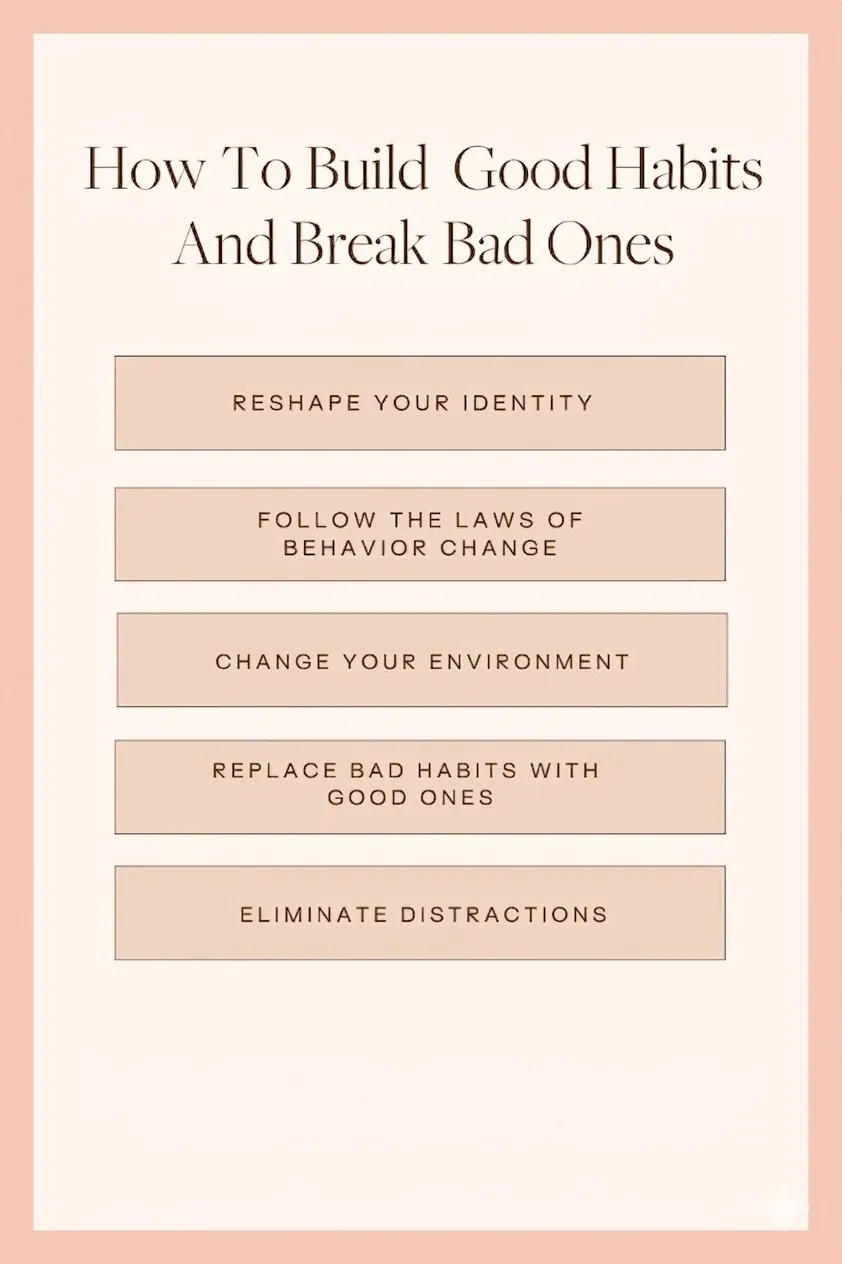
❌ How to Break Bad Habits (Reverse the Laws)
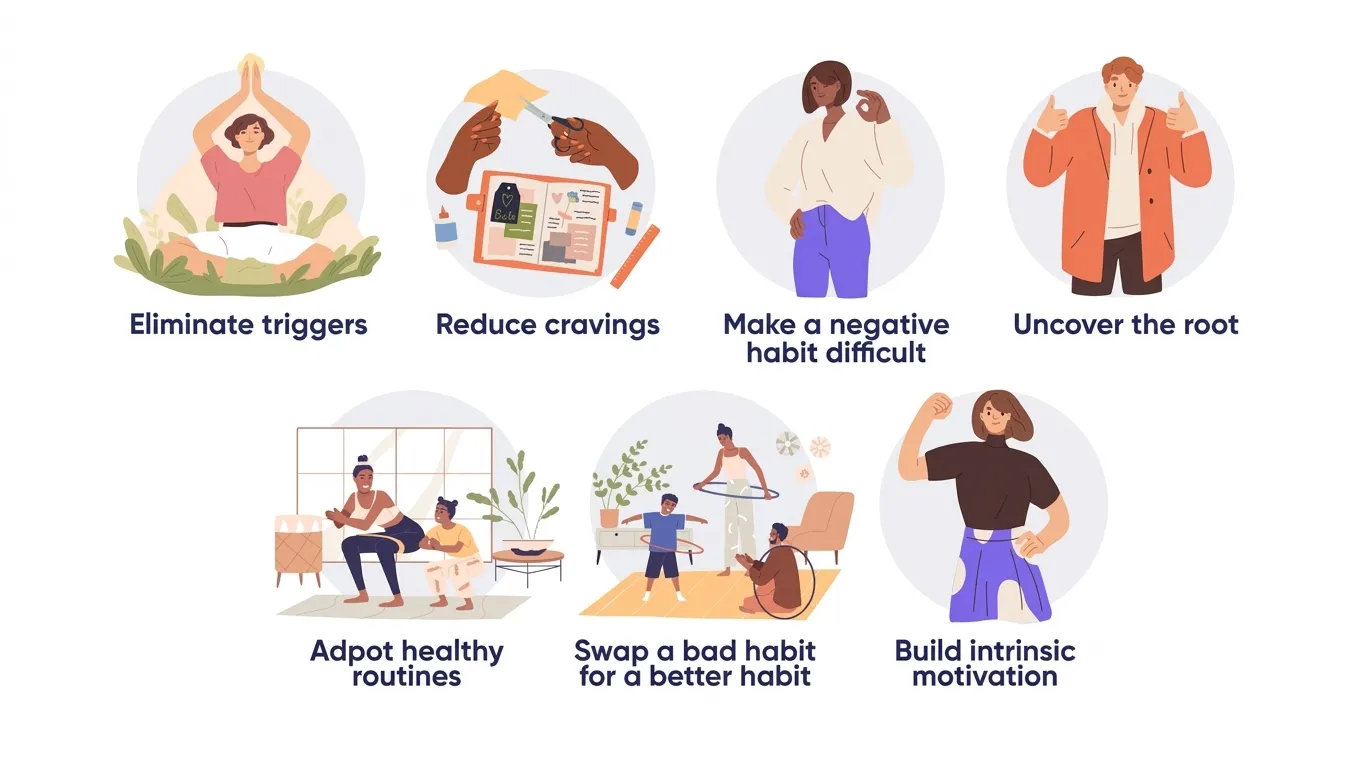
1. Make It Invisible
- Remove triggers
- Avoid environment
2. Make It Unattractive
- Focus on negative consequences
3. Make It Difficult
- Add friction
4. Make It Unsatisfying
- Accountability partner
- Habit contract
🔥 Advanced Concepts (Very Important)
🧠 Identity-Based Habits
Don’t focus on goals
Focus on identity
Example:
- “I want to run” ❌
- “I am a runner” ✅
📈 Frequency > Intensity
Repeating small actions matters more than doing big actions occasionally
😴 Biggest Enemy = Boredom
Success comes from doing the same thing consistently, even when it’s boring
⚠️ Habits Alone Are Not Enough
Habits = automatic
But improvement requires:
👉 deliberate practice
🧩 Simple Practical System (You Can Start Today)
🌅 Morning
- Make bed
- Drink water
- Plan top 3 tasks
🏃 Day
- Do hardest task first
- Move more
- Eat better
🌙 Night
- Reflect
- Journal
- Prepare tomorrow
🧠 Final Insight
Your life is not shaped by one big decision
It is shaped by what you do every day
💬 One-Line Summary
Make good habits obvious, attractive, easy, and satisfying
Make bad habits invisible, unattractive, difficult, and painful