
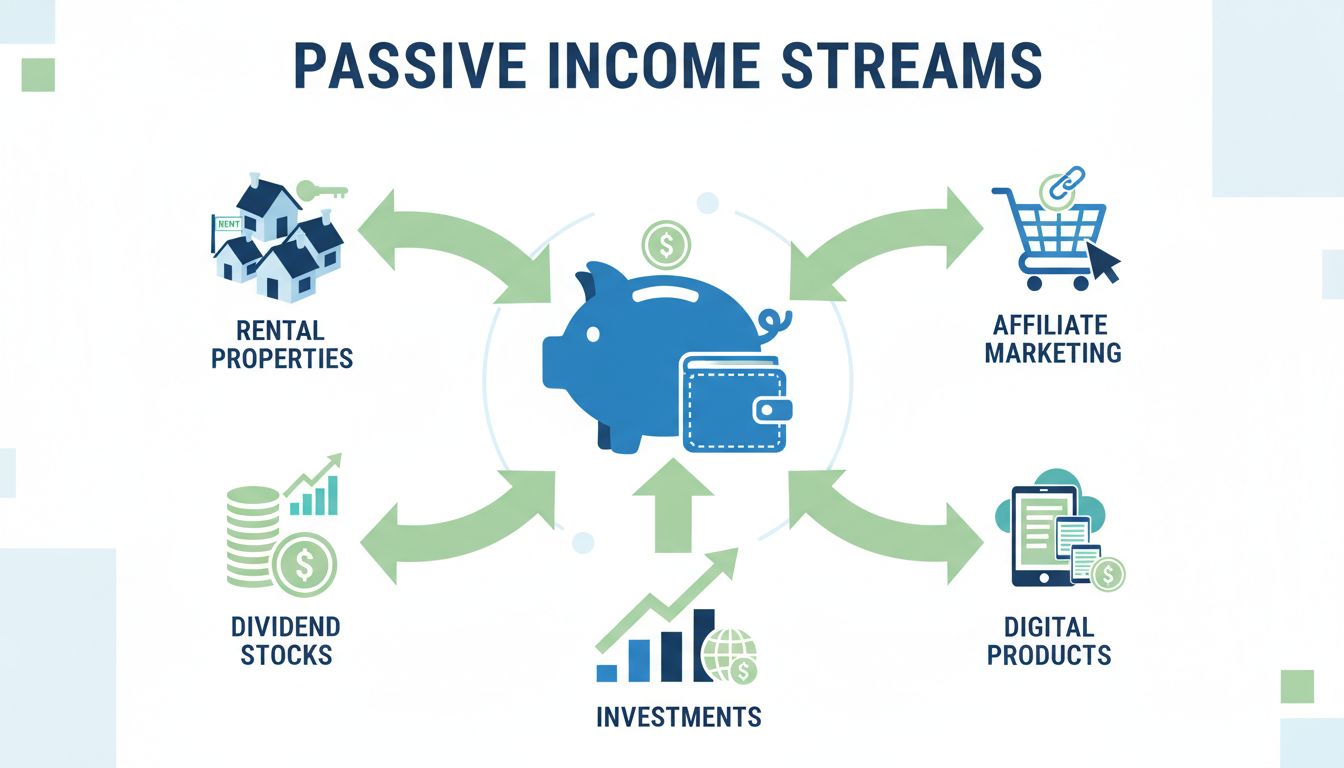
Passive income is a powerful tool for financial freedom, allowing you to earn money with minimal ongoing effort while focusing on other priorities. Research shows that over 65% of self-made millionaires have at least three sources of passive income. Developing multiple streams not only increases wealth but also provides financial resilience, allowing you to navigate economic ups and downs with more stability.
This guide explores the concept of passive income, the types of opportunities available, the setup steps, potential risks, costs, and examples of successful implementation.
Understanding Passive Income
Passive income is money earned with minimal day-to-day involvement. Unlike active income, where you trade time for money, passive income comes from assets or systems that generate returns independently. Common examples include:
- Dividends from stock investments
- Rental property income
- Interest from savings or bonds
- Royalties from books, music, or other creative works
- Digital product sales
- Affiliate marketing commissions
The key to passive income is that your initial effort—whether financial, creative, or intellectual—creates a revenue-generating asset that continues producing income with minimal additional work.
Key Types of Passive Income Opportunities
The digital era has expanded traditional options into innovative streams that leverage technology. Here’s a breakdown of popular passive income opportunities:
| Passive Income Type | Typical Setup Effort | Ongoing Involvement |
| Dividend Investing | Moderate | Minimal |
| Rental Properties | High | Low to Moderate |
| Digital Product Sales | High | Minimal |
| Affiliate Marketing | Moderate | Minimal |
| E-commerce Automation | High | Minimal |
| Crypto Staking | Low to Moderate | Minimal |
| Real Estate Crowdfunding | Low | Minimal |
| Print-on-Demand | Moderate | Minimal |
Examples of passive income in practice:
- Selling e-books, online courses, or software
- Dropshipping or automated e-commerce stores
- Designing merchandise for print-on-demand platforms
- Crypto staking or automated investment platforms (robo-advisors)
- Investing in real estate crowdfunding without managing properties
Successful strategies often combine multiple streams, creating diversified “financial engines” that produce consistent returns with minimal daily involvement. Align your passive income opportunities with your skills, interests, and available resources. Start small, learn continuously, and expand gradually.
How Passive Income Generates Earnings
The primary mechanisms of passive income include:
- Investment returns: Dividends or interest from stocks, bonds, and ETFs
- Rental income: Money from property ownership without daily management
- Digital product sales: Earnings from online courses, software, or e-books
- Affiliate marketing: Commissions for recommending products or services
- Royalties: Income from intellectual property like books, music, or patents
The essential principle is that your revenue-generating asset continues earning with minimal ongoing effort. Initial investment of time, money, or creativity compounds over time, allowing small efforts to generate long-term income.
Costs, Risks, and Tax Implications
Passive income is not risk-free. Key considerations include:
- Taxes: Different types of income are taxed differently; dividends, rental income, and royalties may have unique rules
- Reporting and compliance: Accurate documentation is required for each income stream
- Investment risk: Market fluctuations, property depreciation, or failed ventures may reduce returns
- Regulatory changes: Laws and tax policies can change, affecting profitability
Smart passive income management requires proactive planning, understanding the tax landscape, and occasionally consulting professionals to minimize risk.
Common Pitfalls and How to Avoid Them
Many aspiring passive income earners fail because they underestimate effort or overlook critical factors. Common mistakes include:
- Unrealistic expectations of instant wealth
- Neglecting market research
- Failing to automate systems for scalability
- Relying on a single platform or income source
- Ignoring continuous learning and adaptation
Successful passive income entrepreneurs treat each stream like a mini-business, continuously analyzing performance, adapting to market trends, and reinvesting for growth.
Final Thoughts
Building passive income is a strategic, long-term approach to financial growth. By diversifying income streams, automating processes, and carefully managing risks, you can develop a resilient financial ecosystem that generates revenue independently of daily labor. Start small, remain disciplined, and continuously refine your strategy to achieve lasting financial freedom.